Buy massivhaus.info ?
We are moving the project
massivhaus.info .
Are you interested in purchasing the domain
massivhaus.info ?
domain@kv-gmbh.de · 0541-91531010
Buy massivhaus.info ?
What is covered in 9th grade middle school math?
In 9th grade middle school math, students typically cover a range of topics including algebra, geometry, statistics, and probability. They may learn about linear equations, quadratic equations, functions, and graphing. Geometry topics may include angles, triangles, circles, and volume. Students may also learn about data analysis, probability, and basic trigonometry concepts. Additionally, they may continue to build on their understanding of number operations and problem-solving skills. **
How do you transition from 7th grade middle school to 8th grade high school?
Transitioning from 7th grade middle school to 8th grade high school can be a big change, but there are a few things you can do to make the transition smoother. First, familiarize yourself with the layout of the new school and locate important areas like classrooms, the cafeteria, and the main office. Second, get to know your teachers and classmates early on to build a support system. Lastly, stay organized with your schoolwork and manage your time effectively to handle the increased workload that often comes with high school. **


Similar search terms for Scholastic-Middle-Grade-Read
Top-Angebote
Products related to Scholastic-Middle-Grade-Read:
-
Scholastic Back to School: Middle Grade Graphix Value PackNew schools, new friends, even a new (green) teacher. Go back to school with these funny and relatable graphic novels.This set includes:Fresh StartHulk TeachMixed FeelingsSpeechless Back to School: Middle Grade Graphix Value Pack50,99 $*Shipping: 0,00 $Secure redirect to the provider
-
Scholastic The Smart Girls Guide To Friendship - Recommended Reading For Middle Grade Readers - PaperbackTitle:. The Smart Girl's Guide to Friendship Condition: [Omitted]. Format: Paperback. ISBN: [Omitted] Overview:. Navigating the intricate world of friendships during the middle-grade years requires more than just heart; it calls for emotional intelligence, clear communication, and a supportive framework to help young girls thrive socially. *The Smart Girl's Guide to Friendship* serves as a vital companion for readers stepping into this dynamic period of growth, offering structured insight into the joys and challenges of building meaningful connections. Presented in an accessible paperback format, this recommended reading stands out as a practical resource that empowers its audience to approach relationships with confidence and wisdom. The guide delves into the essential mechanics of healthy friendships, addressing topics that resonate deeply with middle-grade readers as they navigate shifting social circles, peer influence, and the desire for belonging. By combining relatable concepts with empowering guidance, the book equips young minds with the tools necessary to foster inclusivity, manage disagreements constructively, and recognize the attributes of true support. It acknowledges the evolving nature of female friendship at this age, validating experiences while providing a roadmap for developing lasting bonds. Aligned with the ethos of cultivating smart, self-assured individuals, the guide encourages readers to view friendship as a partnership built on mutual respect. It highlights the importance of self-worth within relationships, reminding girls that being a good friend begins with understanding oneself. The content is designed to demystify common social hurdles, transforming potentially overwhelming situations into manageable learning opportunities. Through a lens of positivity and encouragement, the book reinforces the idea that every girl has the capacity to create a friend group where everyone feels valued and heard. Whether read independently or discussed between parents and daughters, this volume functions as both an educational aid and a reassuring message that navigating social complexities is a skill set that can be learned, practiced, and mastered. What Makes This Book Stand Out:. What truly sets *The Smart Girl's Guide to Friendship* apart is its direct, action-oriented approach tailored specifically for the cognitive and emotional development of middle-grade readers. Rather than presenting abstract theories, the book breaks down complex social dynamics into digestible, easy-to-digest advice that girls can apply immediately in their daily lives. The writing style is engineered to feel like a conversation with a trusted mentor, creating an inviting atmosphere where readers feel comfortable exploring sensitive topics without fear of judgment. This format transforms the reading experience into an interactive journey of self-discovery, encouraging active reflection on personal values and behaviors. The emphasis on practical...6,99 £*Shipping: 2,99 £Secure redirect to the provider
-
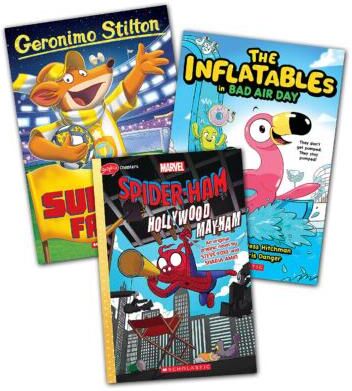
Scholastic Favorite Read Alouds (Ages 7-10)These stories full of action and adventure are sure to be read aloud favorites.This set includes:Spider-Ham: Hollywood May-HamThe Inflatables in Bad Air Day (The Inflatables #1)The Super Cup Face-Off (Geronimo Stilton #81) Favorite Read Alouds (Ages...20,36 $*Shipping: 0,00 $Secure redirect to the provider


-
Why do we call the present time modern/early modern and not the modern middle ages or simply middle ages?
We call the present time modern or early modern because it is characterized by significant advancements in technology, science, and social organization. The term "modern" reflects the rapid changes and progress that have occurred in recent centuries. On the other hand, the Middle Ages is a distinct historical period that is often associated with feudalism, the dominance of the Catholic Church, and limited technological and intellectual development. Therefore, it is not referred to as the "modern Middle Ages" because it does not reflect the same level of progress and change as the present era. **
-
Which English books are read in the 11th grade?
In 11th grade English classes, students may read a variety of classic and contemporary literature. Some common books that are often included in the curriculum for 11th grade English classes include "The Great Gatsby" by F. Scott Fitzgerald, "To Kill a Mockingbird" by Harper Lee, "The Catcher in the Rye" by J.D. Salinger, "1984" by George Orwell, and "The Crucible" by Arthur Miller. These books are chosen for their literary merit and their ability to spark discussions about important themes and issues. Additionally, teachers may also incorporate other texts such as poetry, short stories, and non-fiction essays into the curriculum. **
-
Are teachers allowed to read out grade warnings aloud?
In general, teachers are allowed to read out grade warnings aloud to students, as long as they do so in a respectful and private manner. However, it is important for teachers to consider the potential impact on the student's privacy and self-esteem before doing so. It may be more appropriate to discuss grade warnings with students in a private setting, such as during office hours or after class. Ultimately, the decision should be made with the student's best interest in mind. **
-
What is the average grade for the 8th grade of the secondary school or middle school?
The average grade for 8th grade students in secondary school or middle school can vary widely depending on the specific school and location. However, in general, the average grade for 8th grade students is typically around a B or B-. This can fluctuate based on the grading scale used by the school, the academic rigor of the curriculum, and the overall performance of the student body. It's important to note that averages can differ significantly from one school to another. **

How do I change schools in the middle of 12th grade?
Changing schools in the middle of 12th grade can be a challenging process, but it is possible. Start by researching potential new schools and their admission requirements. Contact the admissions office of the new school to inquire about transferring credits and necessary documentation. It's important to stay organized and communicate with both your current and prospective schools to ensure a smooth transition. Be prepared for potential adjustments academically and socially, and try to make the most of your remaining time in high school. **
How do you change schools in the middle of 12th grade?
Changing schools in the middle of 12th grade can be challenging, but it is possible. The first step would be to inform your current school of your decision to transfer and obtain a transfer certificate. Then, research and identify potential new schools that offer the courses you need to complete your senior year. Contact the admissions office of the new school to inquire about their application process and deadlines. Finally, once accepted, work closely with both schools to ensure a smooth transition of your academic records and credits. **
Top-Angebote
Products related to Scholastic-Middle-Grade-Read:
-
Scholastic Middle Grade Read Aloud Picks (Ages 8-12)Share stories with these four middle-grade titles perfect for reading aloud.This set includes:Bhai for NowHummingbirdIt's The End of the World and I'm in My Bathing SuitWitchlings Middle Grade Read Aloud Picks (Ages 8-12)62,86 $*Shipping: 0,00 $Secure redirect to the provider
-
Scholastic Back to School: Middle Grade Graphix Value PackNew schools, new friends, even a new (green) teacher. Go back to school with these funny and relatable graphic novels.This set includes:Fresh StartHulk TeachMixed FeelingsSpeechless Back to School: Middle Grade Graphix Value Pack50,99 $*Shipping: 0,00 $Secure redirect to the provider
-
Scholastic The Smart Girls Guide To Friendship - Recommended Reading For Middle Grade Readers - PaperbackTitle:. The Smart Girl's Guide to Friendship Condition: [Omitted]. Format: Paperback. ISBN: [Omitted] Overview:. Navigating the intricate world of friendships during the middle-grade years requires more than just heart; it calls for emotional intelligence, clear communication, and a supportive framework to help young girls thrive socially. *The Smart Girl's Guide to Friendship* serves as a vital companion for readers stepping into this dynamic period of growth, offering structured insight into the joys and challenges of building meaningful connections. Presented in an accessible paperback format, this recommended reading stands out as a practical resource that empowers its audience to approach relationships with confidence and wisdom. The guide delves into the essential mechanics of healthy friendships, addressing topics that resonate deeply with middle-grade readers as they navigate shifting social circles, peer influence, and the desire for belonging. By combining relatable concepts with empowering guidance, the book equips young minds with the tools necessary to foster inclusivity, manage disagreements constructively, and recognize the attributes of true support. It acknowledges the evolving nature of female friendship at this age, validating experiences while providing a roadmap for developing lasting bonds. Aligned with the ethos of cultivating smart, self-assured individuals, the guide encourages readers to view friendship as a partnership built on mutual respect. It highlights the importance of self-worth within relationships, reminding girls that being a good friend begins with understanding oneself. The content is designed to demystify common social hurdles, transforming potentially overwhelming situations into manageable learning opportunities. Through a lens of positivity and encouragement, the book reinforces the idea that every girl has the capacity to create a friend group where everyone feels valued and heard. Whether read independently or discussed between parents and daughters, this volume functions as both an educational aid and a reassuring message that navigating social complexities is a skill set that can be learned, practiced, and mastered. What Makes This Book Stand Out:. What truly sets *The Smart Girl's Guide to Friendship* apart is its direct, action-oriented approach tailored specifically for the cognitive and emotional development of middle-grade readers. Rather than presenting abstract theories, the book breaks down complex social dynamics into digestible, easy-to-digest advice that girls can apply immediately in their daily lives. The writing style is engineered to feel like a conversation with a trusted mentor, creating an inviting atmosphere where readers feel comfortable exploring sensitive topics without fear of judgment. This format transforms the reading experience into an interactive journey of self-discovery, encouraging active reflection on personal values and behaviors. The emphasis on practical...6,99 £*Shipping: 2,99 £Secure redirect to the provider
-
What is covered in 9th grade middle school math?
In 9th grade middle school math, students typically cover a range of topics including algebra, geometry, statistics, and probability. They may learn about linear equations, quadratic equations, functions, and graphing. Geometry topics may include angles, triangles, circles, and volume. Students may also learn about data analysis, probability, and basic trigonometry concepts. Additionally, they may continue to build on their understanding of number operations and problem-solving skills. **
-
How do you transition from 7th grade middle school to 8th grade high school?
Transitioning from 7th grade middle school to 8th grade high school can be a big change, but there are a few things you can do to make the transition smoother. First, familiarize yourself with the layout of the new school and locate important areas like classrooms, the cafeteria, and the main office. Second, get to know your teachers and classmates early on to build a support system. Lastly, stay organized with your schoolwork and manage your time effectively to handle the increased workload that often comes with high school. **
-
Why do we call the present time modern/early modern and not the modern middle ages or simply middle ages?
We call the present time modern or early modern because it is characterized by significant advancements in technology, science, and social organization. The term "modern" reflects the rapid changes and progress that have occurred in recent centuries. On the other hand, the Middle Ages is a distinct historical period that is often associated with feudalism, the dominance of the Catholic Church, and limited technological and intellectual development. Therefore, it is not referred to as the "modern Middle Ages" because it does not reflect the same level of progress and change as the present era. **
-
Which English books are read in the 11th grade?
In 11th grade English classes, students may read a variety of classic and contemporary literature. Some common books that are often included in the curriculum for 11th grade English classes include "The Great Gatsby" by F. Scott Fitzgerald, "To Kill a Mockingbird" by Harper Lee, "The Catcher in the Rye" by J.D. Salinger, "1984" by George Orwell, and "The Crucible" by Arthur Miller. These books are chosen for their literary merit and their ability to spark discussions about important themes and issues. Additionally, teachers may also incorporate other texts such as poetry, short stories, and non-fiction essays into the curriculum. **
Similar search terms for Scholastic-Middle-Grade-Read
-
Scholastic Favorite Read Alouds (Ages 7-10)These stories full of action and adventure are sure to be read aloud favorites.This set includes:Spider-Ham: Hollywood May-HamThe Inflatables in Bad Air Day (The Inflatables #1)The Super Cup Face-Off (Geronimo Stilton #81) Favorite Read Alouds (Ages...20,36 $*Shipping: 0,00 $Secure redirect to the provider
-
Scholastic Refugee The Graphic Novel By Alan Gratz - Historical Fiction - Paperback Edition For Middle Grade ReadersTitle:. Refugee – The Graphic Novel. Format: Paperback Overview:. This powerful graphic adaptation brings Alan Gratz’s acclaimed historical fiction to life through striking visual storytelling. You will follow three children navigating dangerous crossings across three different eras, all bound together by a shared desperate quest for safety. One boy must flee Nazi Germany right before Kristallnacht strikes. Another child escapes from a Cuban boat camp during the Mariel boatlift. A third family tries to reach Europe from the midst of civil war-torn Syria. Each storyline advances in real-time, shifting chapters rapidly to heighten tension and show how courage takes many forms. When this story first arrived as a prose novel, it captivated readers with its gripping parallel narratives. Now, adapted into a graphic novel, the emotional weight of each journey gains even more immediacy through vivid illustration. Watching these characters overcome impossible odds becomes deeply personal when their expressions and surroundings are painted beautifully on every page. What Makes This Book Stand Out:. The shift from text-only to a full visual adaptation transforms how you experience this historical drama. Every border crossing, hidden letter, and moment of quiet dread gets a dedicated panel that pulls you directly into the action. The artwork captures both the harsh realities of exile and the small triumphs survivors hold onto daily. Instead of relying solely on internal monologue to build suspense, the graphic novel uses expressive facial reactions and atmospheric backgrounds to convey fear and hope simultaneously. This visual approach makes complex historical events far easier for middle-grade learners to grasp. Students can instantly recognize the symbols of occupation, the chaos of port departures, and the exhaustion of endless trekking. At the same time, parents and teachers appreciate how the art softens some of the heavier subject matter enough to keep young pages turning. The pacing feels cinematic, which naturally encourages longer, uninterrupted reading sessions. Who This Book Is Perfect For:. Middle-grade readers aged eight to twelve will find this format perfectly suited to their growing appetite for deeper topics. Reluctant readers who usually skip dense novels often pick up graphic adaptations eagerly, making this an excellent bridge into serious historical fiction. Classrooms covering World War II, modern refugee crises, or Cold War policies will benefit greatly from the clear scene-by-scene breakdowns. Parents looking for thoughtful discussion starters at home will appreciate how the visuals prompt conversations about empathy, displacement, and global responsibility. Collectors of Alan Gratz’s complete bibliography will also welcome this updated edition to sit beside the standard releases. Key Highlights:. Brings three distinct historical timelines together into one seamless, visually stunning narrative. Uses dynamic panel layouts to intensify...10,99 £*Shipping: 2,99 £Secure redirect to the provider
-
Are teachers allowed to read out grade warnings aloud?
In general, teachers are allowed to read out grade warnings aloud to students, as long as they do so in a respectful and private manner. However, it is important for teachers to consider the potential impact on the student's privacy and self-esteem before doing so. It may be more appropriate to discuss grade warnings with students in a private setting, such as during office hours or after class. Ultimately, the decision should be made with the student's best interest in mind. **
-
What is the average grade for the 8th grade of the secondary school or middle school?
The average grade for 8th grade students in secondary school or middle school can vary widely depending on the specific school and location. However, in general, the average grade for 8th grade students is typically around a B or B-. This can fluctuate based on the grading scale used by the school, the academic rigor of the curriculum, and the overall performance of the student body. It's important to note that averages can differ significantly from one school to another. **
-
How do I change schools in the middle of 12th grade?
Changing schools in the middle of 12th grade can be a challenging process, but it is possible. Start by researching potential new schools and their admission requirements. Contact the admissions office of the new school to inquire about transferring credits and necessary documentation. It's important to stay organized and communicate with both your current and prospective schools to ensure a smooth transition. Be prepared for potential adjustments academically and socially, and try to make the most of your remaining time in high school. **
-
How do you change schools in the middle of 12th grade?
Changing schools in the middle of 12th grade can be challenging, but it is possible. The first step would be to inform your current school of your decision to transfer and obtain a transfer certificate. Then, research and identify potential new schools that offer the courses you need to complete your senior year. Contact the admissions office of the new school to inquire about their application process and deadlines. Finally, once accepted, work closely with both schools to ensure a smooth transition of your academic records and credits. **
* All prices are inclusive of VAT and, if applicable, plus shipping costs. The offer information is based on the details provided by the respective shop and is updated through automated processes. Real-time updates do not occur, so deviations can occur in individual cases. ** Note: Parts of this content were created by AI.